
106. Construct Binary Tree from Inorder and Postorder Traversal
Given two integer arrays inorder and postorder where inorder is the inorder traversal of a binary tree and postorder is the postorder traversal of the same tree, construct and return the binary tree.
Example 1:
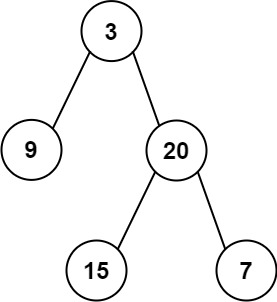
Input: inorder = [9,3,15,20,7], postorder = [9,15,7,20,3]
Output: [3,9,20,null,null,15,7]
Example 2:
Input: inorder = [-1], postorder = [-1]
Output: [-1]
Constraints:
1 <= inorder.length <= 3000postorder.length == inorder.length-3000 <= inorder[i], postorder[i] <= 3000inorderandpostorderconsist of unique values.- Each value of
postorderalso appears ininorder. inorderis guaranteed to be the inorder traversal of the tree.postorderis guaranteed to be the postorder traversal of the tree.
The solution to the above question
/**
* Definition for a binary tree node.
* struct TreeNode {
* int val;
* TreeNode *left;
* TreeNode *right;
* TreeNode() : val(0), left(nullptr), right(nullptr) {}
* TreeNode(int x) : val(x), left(nullptr), right(nullptr) {}
* TreeNode(int x, TreeNode *left, TreeNode *right) : val(x), left(left), right(right) {}
* };
*/
class Solution {
public:
TreeNode* helper(vector<int>&in, vector<int>& post, int ins, int ine, int pos, int poe){
if(ins>ine){
return NULL;
}
int idx=0;
for(int i=ins; i<=ine; i++){
if(in[i]==post[poe]){
idx=i;
break;
}
}
int inls=ins;
int inrs=idx+1;
int inle=idx-1;
int inre=ine;
int pls=pos;
int pre=poe-1;
int ple=pls+inle-inls;
int prs=ple+1;
TreeNode* root=new TreeNode(post[poe]);
root->left=helper(in,post, inls, inle, pls, ple);
root->right=helper(in, post, inrs, inre, prs, pre);
return root;
}
TreeNode* buildTree(vector<int>& inorder, vector<int>& postorder) {
return helper(inorder,postorder,0,inorder.size()-1,0,postorder.size()-1);
}
};




0 Comments
If you have any doubts/suggestion/any query or want to improve this article, you can comment down below and let me know. Will reply to you soon.